Are Silk Scarves Collectible? What Makes Them Art
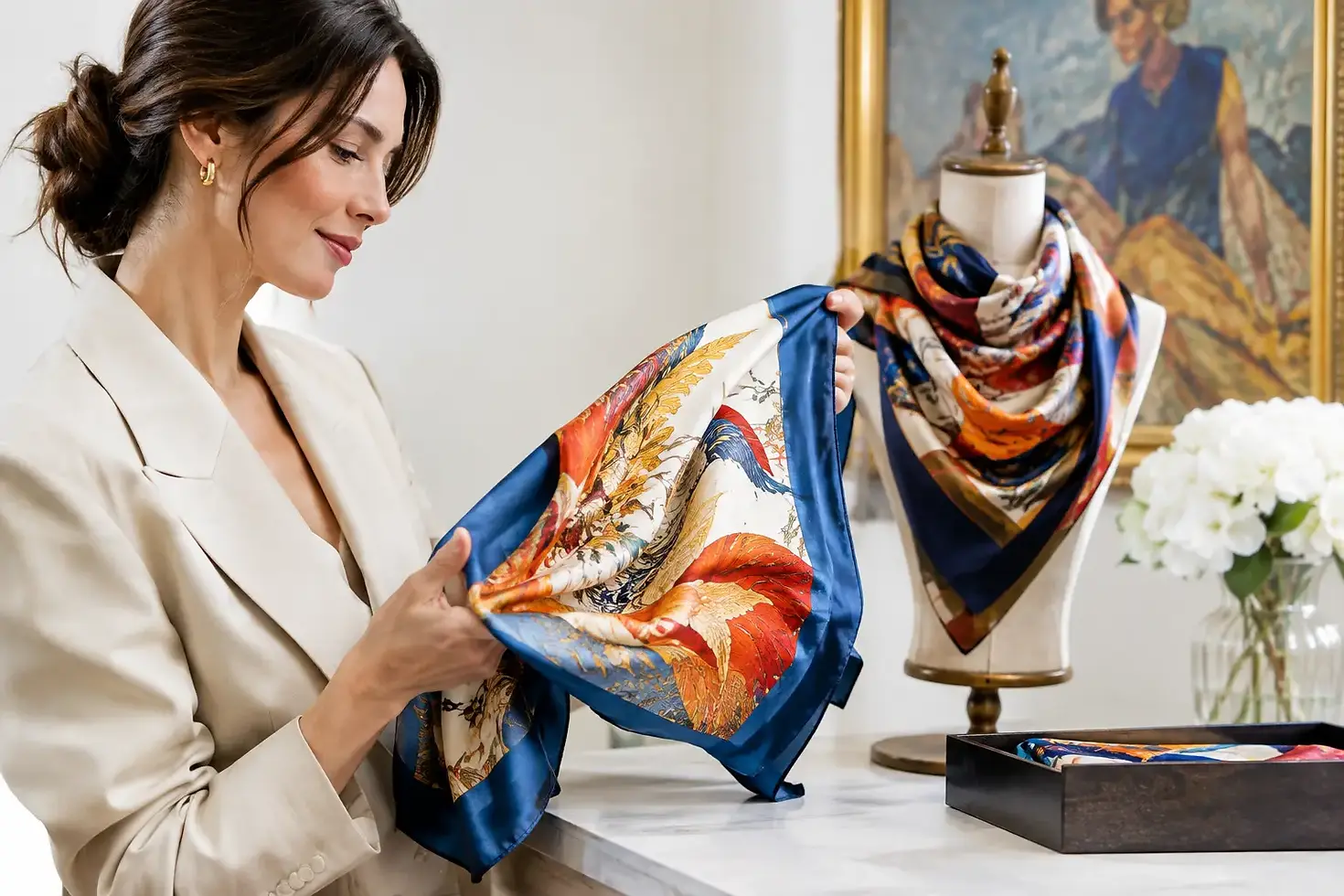
A silk scarf can be a passing souvenir, folded into a drawer after one glamorous afternoon. Or it can hold a room in suspension: a composition of color, gesture, memory, and unmistakable authorship, waiting to be worn again. So, are silk scarves collectible? The exceptional ones are - not because silk is precious on its own, but because an extraordinary scarf carries an artistic point of view.
For the discerning collector, the question is not whether a scarf belongs beside a painting or sculpture. It is whether it possesses enough presence to move between the wardrobe, the wall, and the intimate theater of a life well lived.
Are Silk Scarves Collectible Art?
They can be, though not every silk scarf is made to be collected. A mass-produced design may be beautifully finished and still remain an accessory. Collectibility begins where repetition gives way to authorship, where a work has a clear origin, a limited existence, and a visual language that remains compelling long after a season has passed.
The most desirable scarves are often tied to an artist, a house with a recognizable creative vision, a defining cultural moment, or a rare production story. Their value may be emotional before it is financial. A collector responds to the line of a painted figure, the tension of a particular palette, the intimacy of a motif that seems made for her. She does not simply acquire silk. She acquires a world she recognizes as her own.
This distinction matters. Fashion changes quickly; art establishes a language. When a scarf is conceived as an artwork before it becomes an object of dress, it can retain its force across decades. It asks to be revisited, styled differently, framed, loaned, inherited, and remembered.
What Gives a Silk Scarf Lasting Value
Rarity is the first threshold, but it is not the whole story. Scarves issued in small editions, created for private commissions, or produced from an original painting offer a level of scarcity that ordinary seasonal accessories cannot imitate. A limited number alone, however, does not create importance. The work must have an interior life.
Artistic authorship supplies that life. Look for a composition that feels complete even when the scarf is laid flat. Consider whether the imagery has movement, whether its color feels particular rather than merely decorative, and whether it reveals new details over time. The strongest designs do not rely on a logo to announce themselves. Their identity is visible in the hand of the artist.
Provenance deepens the story. Documentation of the original artwork, edition number, date of creation, certificate of authenticity, exhibition history, or commission context gives a collector something more substantial than a beautiful object. It creates continuity between the silk piece and its source. This is especially meaningful when the scarf is part of a larger body of work - a painting, a feminine archetype, or a collection that unfolds across couture and interiors.
Craftsmanship is equally revealing. Fine silk has a particular luminosity: it receives color rather than simply displaying it. Precise printing or hand-painted detail, refined rolled edges, balanced scale, and a graceful hand all affect how the work lives on the body. The difference is felt in motion. A superior scarf catches light, shifts with the wearer, and allows the artwork to become temporarily alive.
Condition matters, particularly for vintage and archival examples. Fading, staining, pulls, damaged hems, and perfume residue can diminish both beauty and market appeal. Yet a small sign of age is not always a flaw. For a rare scarf with compelling provenance, gentle evidence of a life may be acceptable. Collecting is never only a matter of perfection. It is a conversation between scarcity, condition, and significance.
The Difference Between a Designer Scarf and a Collectible One
A designer name can create demand, but recognition is not a guarantee of collectibility. Some branded scarves are made in large quantities and refreshed continually. They may offer pleasure and polish, yet their abundance makes them less distinct as objects of pursuit.
A collectible scarf has a stronger claim: it represents a specific vision that cannot be easily replaced. Perhaps it belongs to a discontinued series, marks an early period in an artist's practice, or was created in dialogue with a place, a patron, or a singular occasion. Perhaps the design began as an original canvas, carrying visible traces of brushwork into silk. The collector is not purchasing familiarity. She is selecting resonance.
This is why two scarves with similar materials and prices can occupy entirely different places in a collection. One may be a lovely fashion purchase. The other may become a personal heirloom, its colors linked forever to an evening, a journey, or the woman who first chose it.
How to Collect Silk Scarves With Discernment
Begin with attraction, then bring rigor to it. The scarf should arrest you before you study its credentials. If the image does not continue to speak after the first encounter, its rarity will eventually feel like paperwork.
After that initial response, ask quieter questions. Who created it? Is there a documented edition or original work behind it? Was it made in a limited quantity? Does the house preserve records of its production? Does the design belong to a coherent artistic universe, or is it simply an isolated print?
It is wise to collect across a personal thread rather than chase every recognizable name. One collector may be drawn to mythic women, saturated botanicals, or abstract gestures that echo the art in her home. Another may seek scarves connected to destinations, ceremonies, or periods of design history. A collection gains force when the pieces speak to one another.
Consider scale as well. A large carré can be worn as a shoulder wrap, styled over eveningwear, draped across a chair, or framed as textile art. A narrower silk piece offers a more intimate expression at the neck, wrist, or handbag. Neither is inherently more collectible. The question is whether the format serves the artwork and whether you can imagine returning to it in more than one setting.
At Violeta Lucce, an original hand-painted work may continue beyond the canvas as a luminous silk creation, allowing the collector to inhabit the same visual language she chooses for her private spaces. This is a different kind of acquisition: art not made smaller for fashion, but made mobile.
Wearing It Does Not Diminish Its Meaning
Some collectors hesitate to wear a treasured scarf for fear of reducing its value. The concern is understandable, especially with rare vintage silk. Excessive sunlight, moisture, friction, makeup, and improper storage can cause real damage. A scarf of exceptional rarity may deserve measured use, careful handling, and periods of rest.
But silk was made to move. A collectible scarf does not have to become untouchable to be respected. Worn with intention, it gathers biography. It appears in photographs, accompanies a celebration, changes the mood of a black dress, and becomes part of how its owner is remembered. That lived dimension can be part of its allure, provided care remains exacting.
Store silk clean, dry, and away from direct light. Avoid leaving it knotted for long periods, and do not hang it where the fabric can stretch. Fold it softly, preferably with acid-free tissue between layers if it will rest for an extended time. Keep its documentation with it. Provenance has a way of becoming more valuable as years pass.
A Collectible Is Chosen, Not Merely Bought
The market may eventually validate a scarf through auction interest, scarcity, or institutional attention. Yet the finest collections begin with a more private instinct. The work should make you feel that no substitute will do.
Choose the silk piece whose imagery seems to know something about you. Wear it into the rooms that matter. Let it rest among the art, books, and objects that have earned their place. Over time, the scarf becomes more than an exquisite square of silk. It becomes evidence of taste, memory, and the rare pleasure of bringing art to life.


Comments